
Last updated November 25, 2026
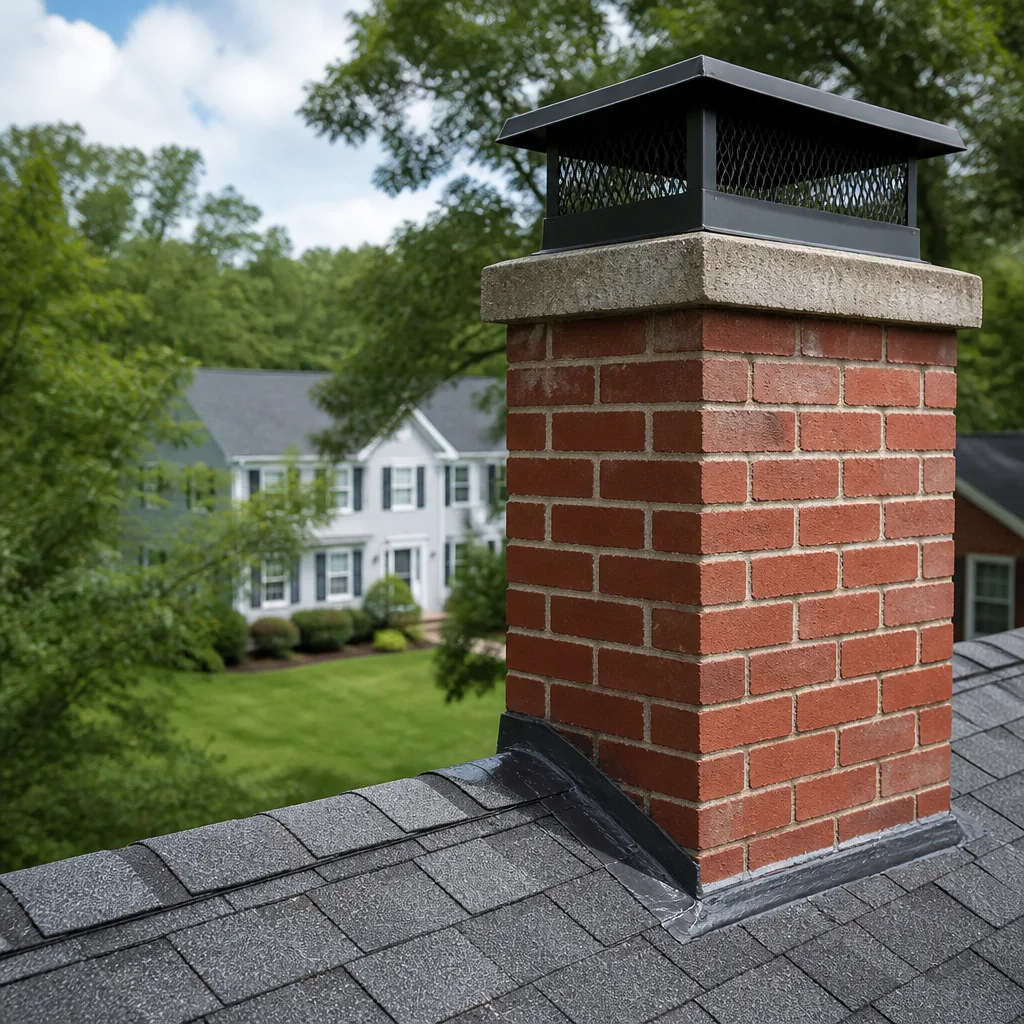 Sweep & inspection
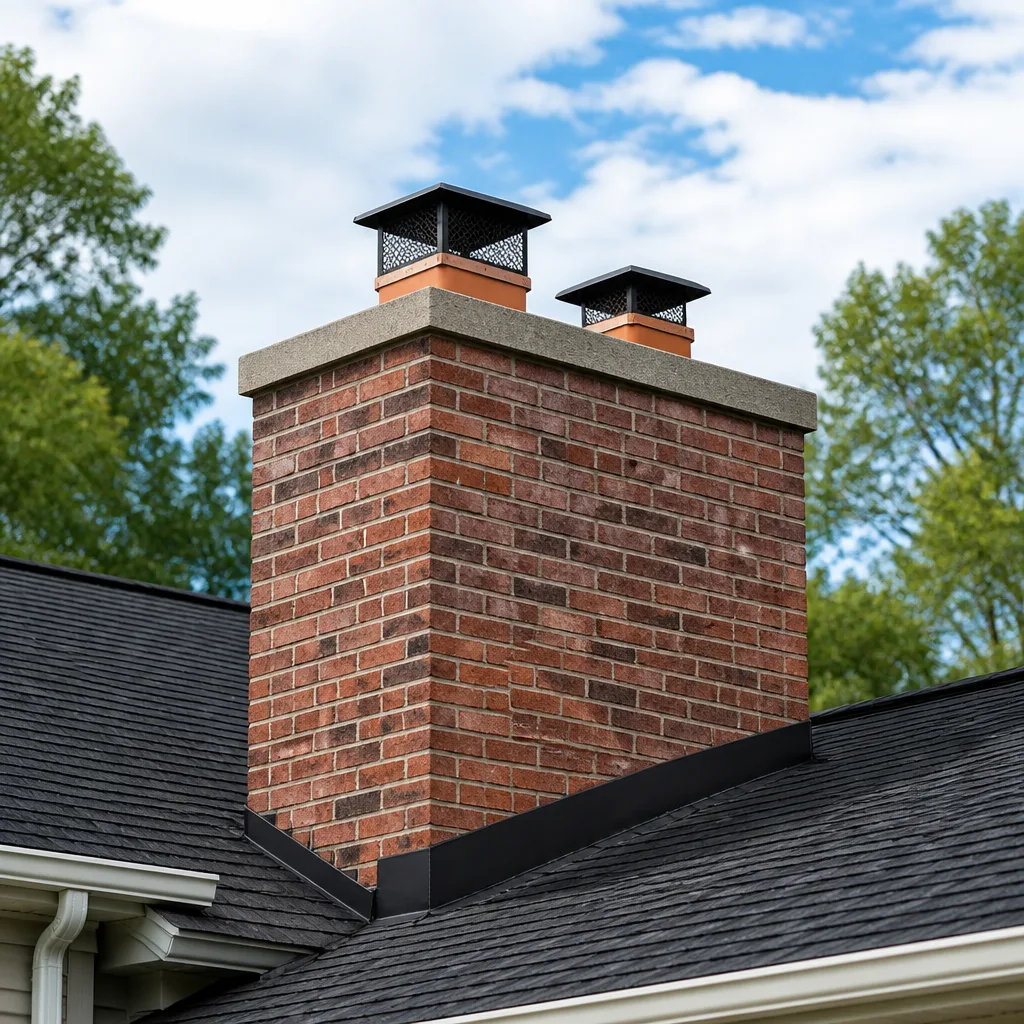 Caps & crowns
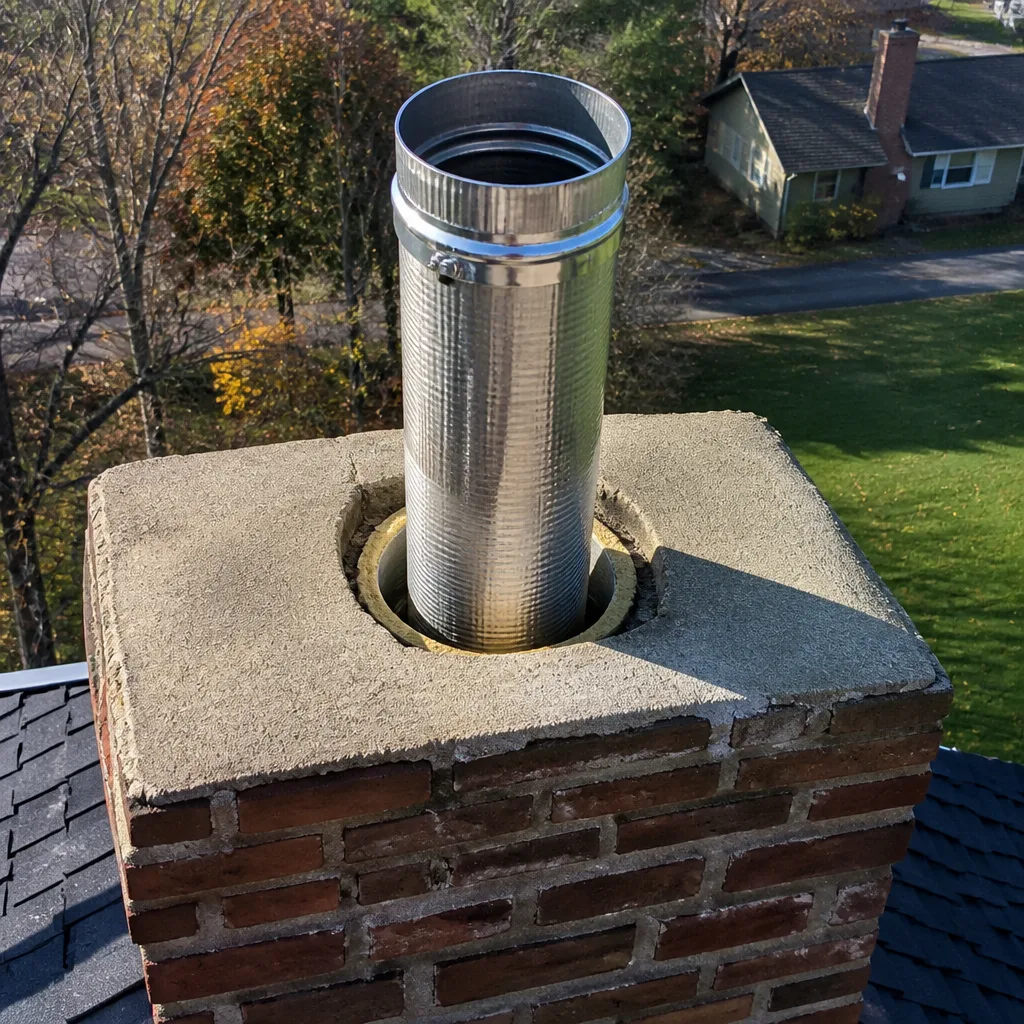 Flue relining
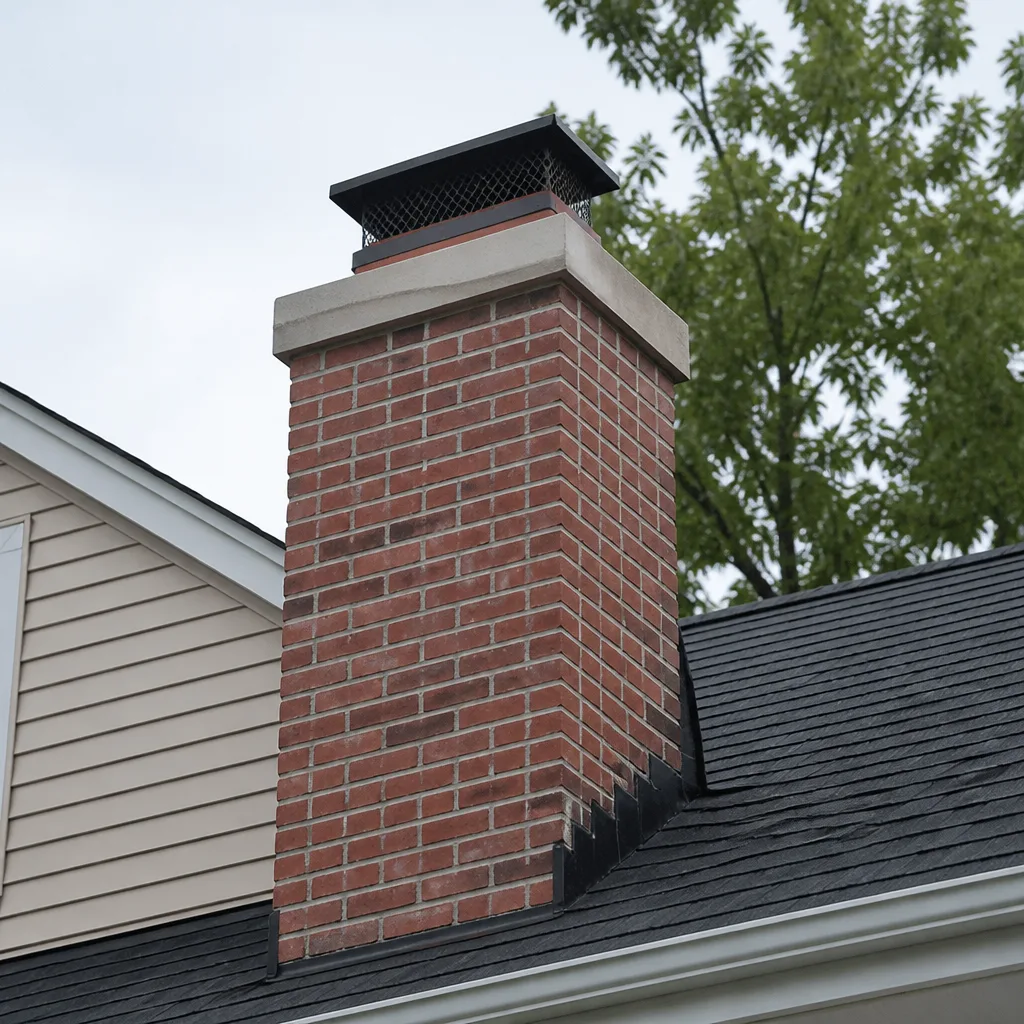 Masonry repair
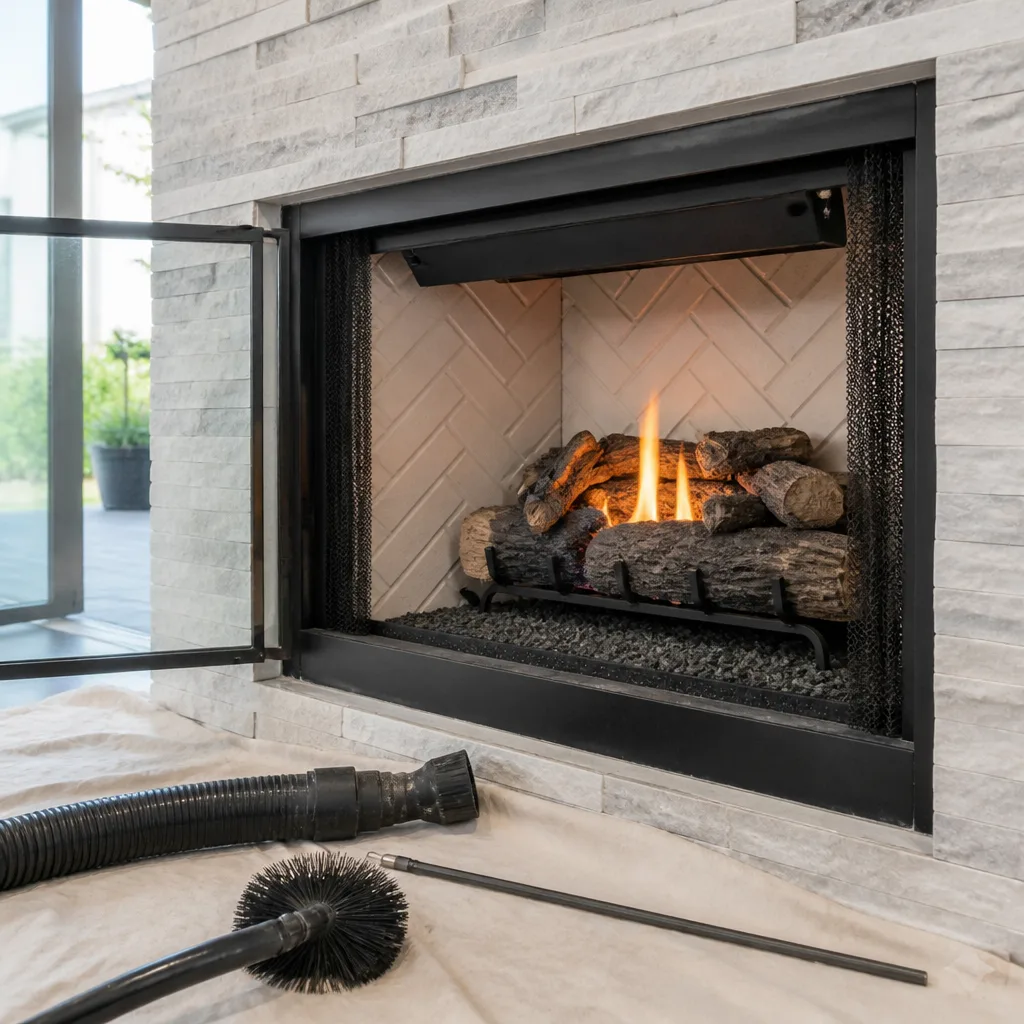 Gas fireplace service
Level 1 sweep and inspection to the NFPA 211 annual standard - flue, crown, cap, and flashing checked and photographed
Chimney sweep logs do not sweep chimneys. They loosen some creosote - which then falls where a brush and vacuum still have to collect it.
DIY vs Professional Chimney Cleaning: The Knoxville Homeowner’s Decision Guide
Most homeowners who ask whether they can clean their own chimney are asking the wrong question. The question isn’t whether you can physically push a brush up a flue. It’s whether the creosote in your chimney is the kind a brush can actually remove, and whether anyone is looking at the parts the brush never touches. A homeowner with a brush kit and a shop vac can do a real job on loose, flaky stage-one creosote. That’s maybe 40% of the chimneys we see around Knoxville. The other 60% carry stage-two or stage-three buildup that hand tools physically cannot address, plus liner, crown, and draft issues that no brush will ever reveal. This guide walks you through a creosote stage assessment, the containment setup a real DIY sweep requires, what DIY can’t inspect, and a decision matrix that ends in a clear answer for your chimney.
Quick Answer
DIY chimney cleaning is reasonable only when your buildup is stage-one (loose, flaky, brushable), your chimney has had a professional inspection recently, and you’re willing to set up proper containment and PPE. In Knoxville’s real-world mix, most chimneys show at least some stage-two glazed creosote or hidden liner and crown problems that a brush can’t fix, which makes a professional sweep the safer and often cheaper call over time. If you’re unsure which stage you have, that uncertainty itself is the answer: get it inspected first.
Styles & brands we work with
- Sweep & inspection
- Caps & crowns
- Flue relining
- Masonry repair
- Gas fireplace service
Table of Contents
- The Creosote Stage Assessment: Is Your Buildup Even DIY-Eligible?
- What a DIY Sweep Actually Requires
- What DIY Cleaning Cannot Assess
- The Liability Question: Insurance and Self-Performed Cleaning
- Why Knoxville Chimneys Present Specific Challenges
- The Decision Matrix: DIY or Professional?
- DIY vs Professional Cost in Knoxville
- Common Mistakes to Avoid
The Creosote Stage Assessment: Is Your Buildup Even DIY-Eligible?
Creosote forms in three distinct stages, and only the first stage is realistically within reach of homeowner tools. Understanding which stage you’re looking at is the single most important step before you buy a brush. What separates a safe chimney from a dangerous one is often invisible until someone trained looks at it, which is why a chimney inspection isn’t a formality – it’s the difference between a safe fire and a dangerous one.
Here’s how the three stages break down:
- Stage one: Soot and flaky, brittle creosote that crumbles when you touch it. It looks like dark ash or thin black flakes. This is the only stage a homeowner brush can genuinely remove, and it’s the stage most common after a season of well-seasoned wood and moderate fires.
- Stage two: Hard, shiny, tar-like deposits that adhere to the flue walls. A poly brush will slide right over it without removing it. Stage two requires professional rotary tooling or chemical treatment, and it’s the stage we find most often in older Knoxville homes that have burned a lot of green or unseasoned wood.
- Stage three: Glazed, hardened creosote that resembles candle wax or crystallized tar. This is the fuel source behind the most severe chimney fires. It cannot be removed by any hand tool and often cannot be removed at all without relining or restoration work. HeatShield and DuraFlex liner systems exist precisely because stage-three chimneys frequently need a new flue interior, not just a cleaning.
You can inspect your own firebox and the lower flue with a flashlight and a mirror to get a rough read on stage. Look up from the damper with a strong light. If what you see is flaky and gray-black, you may be in stage one. If it’s glassy, tar-like, or has the sheen of hardened wax, stop there. That’s stage two or three, and no DIY kit will touch it. Even when the view looks fine, a camera inspection from a trained technician often reveals what the eye can’t: the upper flue, the smoke chamber, and the liner joints are where the real evidence lives. If you’ve never had a professional inspection, the honest first step is scheduling a Chimney Sweep Knoxville visit before you spend money on a brush you may never use.
What a DIY Sweep Actually Requires
If your assessment puts you in stage one and you’ve had a recent inspection, a DIY sweep is possible. But the equipment list is longer than most homeowners expect. In our experience, the average DIY attempt skips at least two essential items, and the two most commonly skipped are the two that keep the rest of the house clean: drop cloth containment and a proper respirator.
Here’s the full setup a safe, contained DIY sweep requires:
- Fitted poly brushes sized to your flue. Round wire brushes damage clay tile liners. Use poly or soft nylon brush heads matched to the actual flue dimensions, which you can measure at the damper frame.
- Enough flexible rods to reach the top of the flue. Rods come in 3- to 6-foot sections and need to reach the full height of the chimney, not just the first ten feet.
- Heavy canvas drop cloths and painter’s tape. Seal the firebox opening completely before you start. Soot travels through a house on air currents in minutes and settles on every horizontal surface.
- A true HEPA shop vacuum. A standard wet/dry vac will blow the finest soot particles straight back into the room. HEPA filtration is not optional.
- An N95 respirator or better, plus sealed eye protection. Creosote dust and soot are respiratory irritants, and the fine dust is the hardest part to clean up after the fact.
- Roof access with fall protection if you plan to sweep from the top. This is where most DIY plans fall apart. Roof work on a steep or wet pitch is a genuine fall hazard. If your access is anything less than safe, sweep from the bottom and skip the roof entirely.
- A plan for disposal. Soot and creosote go in a sealed metal container, not a household trash bag sitting in a garage.
If that list feels like a project of its own, that’s the honest answer. The tools cost more than a professional sweep in most Knoxville cases, and you’ll use them once a year at best. There’s no shame in deciding the brush kit stays at the store.
What DIY Cleaning Cannot Assess
A brush removes deposits. It does not tell you anything about the condition of the chimney itself. This is the gap that makes DIY dangerous even when the cleaning goes perfectly. The things a trained technician checks are the things a brush never touches, and several of them are the difference between a chimney that vents safely and one that doesn’t.
- Liner cracks and gaps. Clay tile liners develop hairline cracks from heat cycling, and prefab liners can separate at the joints. A cracked liner lets heat and carbon monoxide into the framing and the living space. You cannot reliably see this from the firebox, and you certainly can’t see it with a brush.
- Flashing integrity. The metal flashing where the chimney meets the roof is a prime water entry point. Failed flashing leads to rot in the roof deck and rusted dampers long before anyone notices a drip inside.
- Crown deterioration. The concrete crown at the top of the chimney cracks with freeze-thaw cycles. A cracked crown channels water into the masonry, and that damage compounds every winter. A professional looks at this directly; a homeowner on the ground never will.
- Negative-pressure draft issues. A chimney that doesn’t draft correctly pushes smoke and carbon monoxide back into the room instead of up and out. Diagnosing draft problems requires understanding the house’s pressure balance, the flue size relative to the firebox, and the surrounding geometry. No amount of brushing fixes a draft problem.
- The smoke chamber and damper assembly. The smoke chamber above the damper is a common creosote trap, and it needs to be physically reached and inspected.
If you want to know what’s actually going on in your chimney, the inspection is the product, not the sweep. We use professional-grade brands like Olympia Chimney and Famco when the inspection finds a component that needs replacement, so there’s no handoff to a second contractor mid-job. If you’ve already had a chimney sweep elsewhere and want a full assessment, we can pick up from there.
The Liability Question: Insurance and Self-Performed Cleaning
The insurance angle is the one homeowners ask about least and should worry about most. A documented professional sweep creates a paper trail that matters if a chimney fire claim ever comes up. A self-performed cleaning creates nothing but your own word about what you did and when.
This isn’t about any specific insurer’s policy language, and we can’t speak to your policy. It’s about how claims get evaluated in general. When a chimney-related fire claim lands on a desk, the adjuster will typically look for evidence of maintenance: receipts, inspection reports, and sweep records. A professional sweep produces all three. A DIY cleaning produces a receipt for a brush and a vague memory of when you last did it. In the worst case, that absence of documentation can complicate a claim or invite more questions about whether the chimney was reasonably maintained.
The same logic applies to what gets found during the work. When a professional sweep documents a cracked liner or a failed crown, that finding is on record with a date. If you repair it, you have proof of the repair. If you don’t, you at least knew about it, which is the honest position. A DIY sweep leaves you blind to problems that were already there and stays silent about the ones the brush couldn’t reach.
There’s also a liability dimension if you ever sell the home. A buyer’s inspector will ask about chimney history and documentation. A file with an inspection report and a current chimney cap & crown record helps the sale. A file with nothing gets flagged, and flagging means negotiation.
None of this is a scare tactic. Most homeowners who clean their own chimney never have a claim, and most chimneys tick along fine for years. The point is simpler: the documentation is the cheap part of the professional route, and it’s the part you can’t manufacture after the fact if something goes wrong.
Why Knoxville Chimneys Present Specific Challenges
Knoxville sits in the Tennessee Valley, and that geography shapes what a chimney goes through here in ways that differ from the flatter parts of the state. The valley traps moisture and temperature inversions, which means the air around your chimney is often more humid than the numbers on a weather app suggest. That humidity is exactly what accelerates the hardening of creosote and the freeze-thaw damage to masonry. Working in an environment where morning fog burns off slow and fall afternoons swing twenty degrees tells you more about chimney wear than any product label does.
The housing stock matters too. Knoxville’s older neighborhoods have plenty of chimneys built into homes with masonry flues that have been heating through dozens of winter seasons. Those flues are more likely to show the accumulated stage-two glazed creosote that builds up when fires are burned low and slow, and more likely to have developed hairline cracks in the tile joints. Newer builds in the same city often use prefab liners with different failure patterns, but the same core problem applies: the interior degrades, and nobody sees it until someone trained looks.
On top of that, Knoxville winters swing hard. A stretch of mild weather followed by a cold snap changes how the chimney drafts and how much creosote condenses before the firebox warms up. The shoulder seasons are when the worst condensation happens, because fires are small and flues don’t get hot enough to burn clean. That behavior drives deposit formation faster than most homeowners realize, and it’s the number one reason we recommend inspecting at the end of the season rather than the beginning of the next.
Our technicians have up to 9 years of experience in exactly this climate, and we’ve seen how the same fuel in the same firebox can produce wildly different creosote depending on how it’s burned. All of that is to say: Knoxville chimneys are not a single-case scenario, and whatever you decide about DIY, the assessment has to be specific to your chimney, not to a generic guide on the internet.
The Decision Matrix: DIY or Professional?
If you want a straight answer without reading another section, use this decision matrix. It scores four variables that predict whether a DIY sweep is reasonable for your specific chimney. You only need to be honest about the inputs, not guess at a conclusion.
- Fuel type. If you burn well-seasoned, dry hardwood and your fires run hot, your creosote is more likely stage one. If you burn green wood, manufactured logs, or smolder fires overnight to make the heat last, you’re feeding stage two and stage three. Unseasoned or low-temp burning pushes the recommendation toward professional in nearly every case.
- Last professional inspection date. If it’s been more than a year, or you can’t remember, that’s a professional call regardless of what the other variables say. You cannot assess your own creosote stage reliably without a baseline inspection, and skipping the inspection is what makes DIY risky in the first place. Our technicians have up to 9 years of experience reading exactly these conditions, and the honest starting point is a documented look at what’s inside the flue.
- Creosote stage. Stage one and a clean firebox with no visible liner damage? DIY is a legitimate option if you’re willing to set up the full containment. Stage two? Professional, every time. Stage three? Professional, and expect the conversation to shift from cleaning to restoration. HeatShield and DuraFlex liner systems are specified by certified chimney professionals for exactly this reason, and a reline handled with the right materials is what gets a stage-three chimney back to safe.
- Chimney age and construction. Older masonry chimneys with clay tile liners and unknown inspection history lean professional. A newer chimney with a recent inspection, factory liner, and mixed fires can lean DIY if everything else scores clean. If you have any doubt about the construction type, treat it as unknown and default to professional.
Read the four answers together, not individually. One “professional” signal in the group is enough to tilt the whole recommendation, because the combination of a stage-two deposit and an unknown liner condition is the setup where a self-performed cleaning does damage that a sweep couldn’t have prevented anyway.
We’ll tell you exactly what we found and exactly what it means before any work begins. If you’re between DIY and professional, an inspection settles it in a way no quiz can.
DIY vs Professional Cost in Knoxville
Chimney sweeping in Knoxville typically costs $180 to $340 depending on flue size, access, and the amount of creosote involved. A DIY start is often quoted at $60 to $120 for the first brush kit, but that’s only the brush. The full containment and PPE setup usually runs $150 to $300 when you buy it new, and the tools don’t degrade gracefully: they sit in a garage eleven months out of the year, and if the chimney ever needs a second sweep in a season you’re back to the same setup.
The numbers look like this in practice:
- Professional sweep: typically $180 – $340 with the written estimate setting the final price, including inspection and a camera-documented report.
- DIY brush kit plus containment and PPE: typically $150 – $300 for a one-chimney setup, plus your time and the disposal problem.
- Professional inspection: typically quoted as part of the sweep when done together, and typically handled separately when you need a standalone assessment.
- Liner restoration or relining if the inspection finds damage: quoted per job by written estimate using HeatShield, DuraFlex, or equivalent professional-grade materials, because the price depends entirely on flue geometry and the extent of restoration required.
The honest comparison isn’t gridle-for-dollar. It’s whether the DIY route replaces the professional sweep or just delays it. If you clean your own chimney for two seasons and then a professional finds stage-two glazing that should have been caught earlier, the money you saved went straight into more expensive restoration work. That’s the outcome we see most often, and it’s the reason we tell homeowners the cost question starts with the inspection, not the brush.
Pricing is per job and the written estimate sets the final figure, so any homeowner comparing options should ask for that estimate in writing before work begins. Call (877) 792-6481 for an exact quote – estimates are free.
Common Mistakes to Avoid
These are the errors that turn a reasonable DIY attempt into a problem, most often because the homeowner invested in cleaning before assessing.
- Buying the brush before the inspection. The most common mistake in Knoxville, and the most expensive. You don’t know if the buildup is even the brushable kind until someone with training looks, and a brush kit bought too early usually turns out to be the wrong tool for the actual job.
- Using a wire brush on a clay tile liner. Wire brushes score and crack ceramic tile, and cracked liners are the exact failure mode that lets heat into the framing. Poly brushes only.
- Skipping the drop cloth containment. Seal the firebox completely before you make one upward stroke. Soot that escapes coats every surface in the room and finds its way into HVAC returns, and it comes back for months.
- Cleaning from the roof without fall protection. Knoxville roof pitches and weather make roof work genuinely dangerous, and soot-slick shingles are worse. Sweep from the bottom unless your roof access is secure and dry.
- Calling it done without an inspection. A brush that comes down clean tells you the visible flue is clean. It says nothing about the liner above, the crown, the flashing, or the smoke chamber. That unexplored territory is where chimney problems start.
- Burning green or unseasoned wood. The single biggest driver of stage-two creosote in any climate. Dry, seasoned wood burned hot produces less creosote and less frequent sweep needs.
- Cleaning a chimney that showed stage-three glazing. Glazed creosote can’t be brushed away and aggressive cleaning on it can crack the liner. Stage three is restoration territory. HeatShield and professional liner assessment are where that conversation goes, not the hardware store.
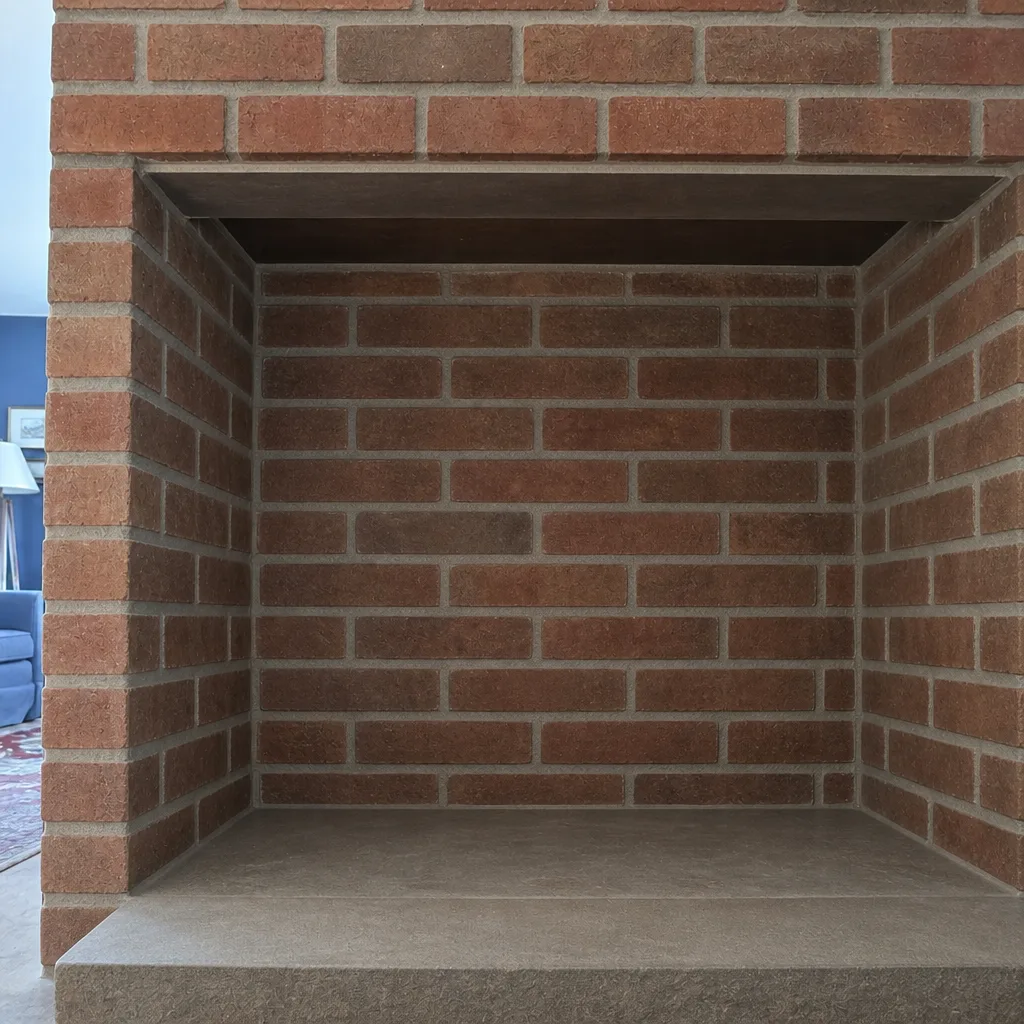
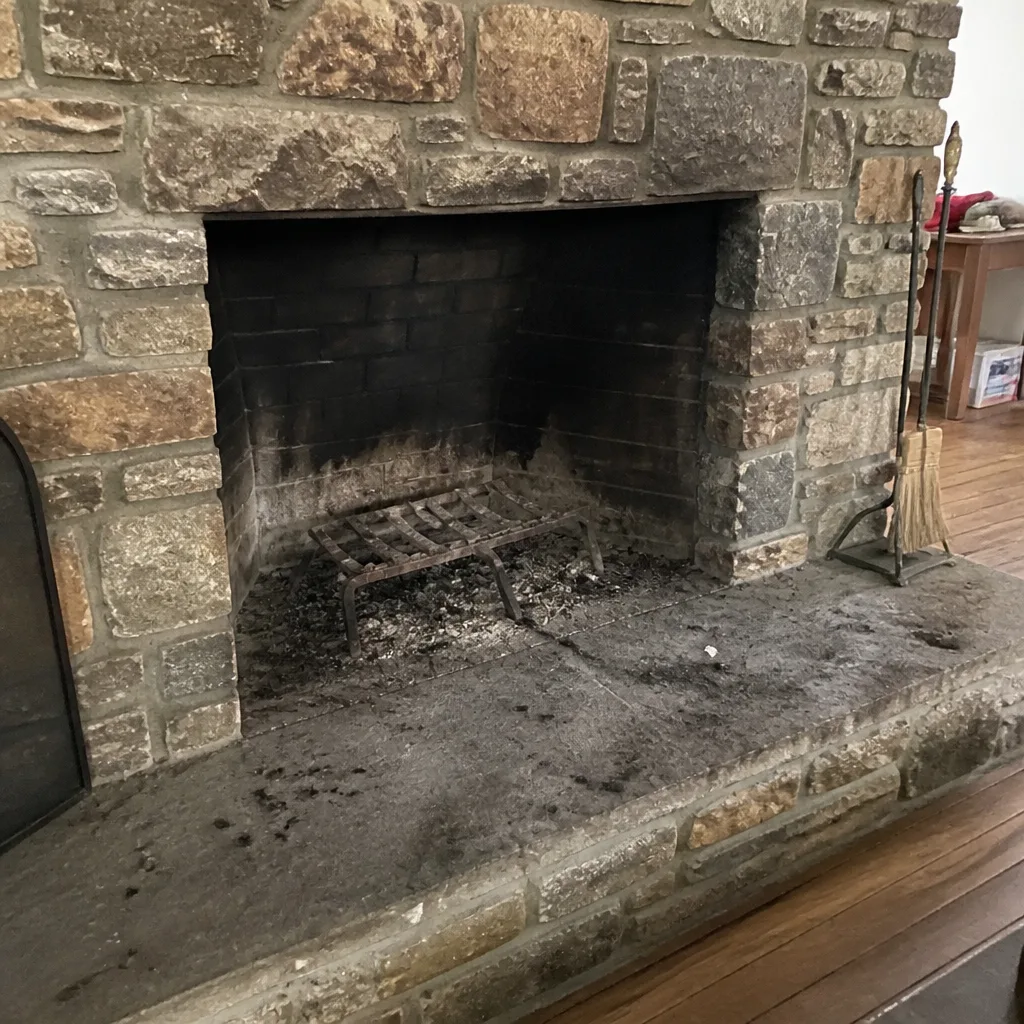
See the difference
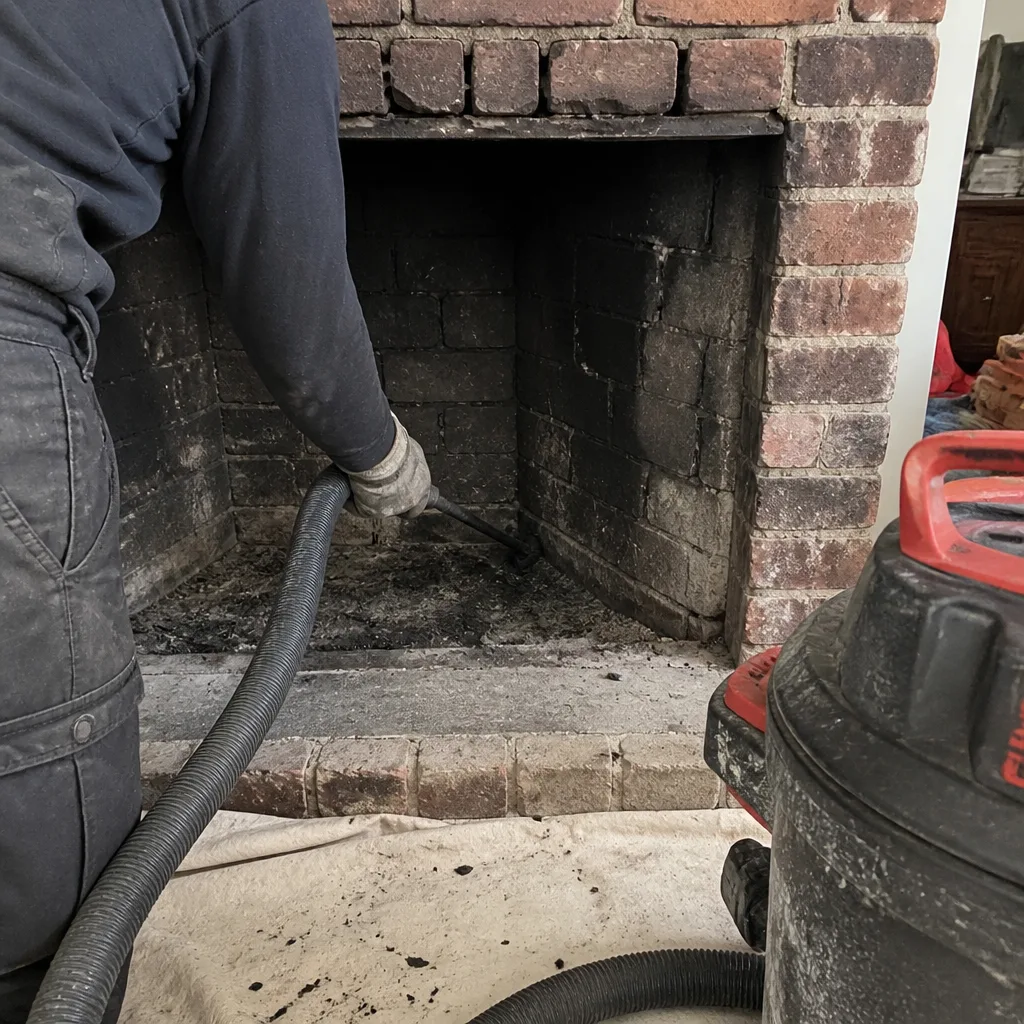 Before
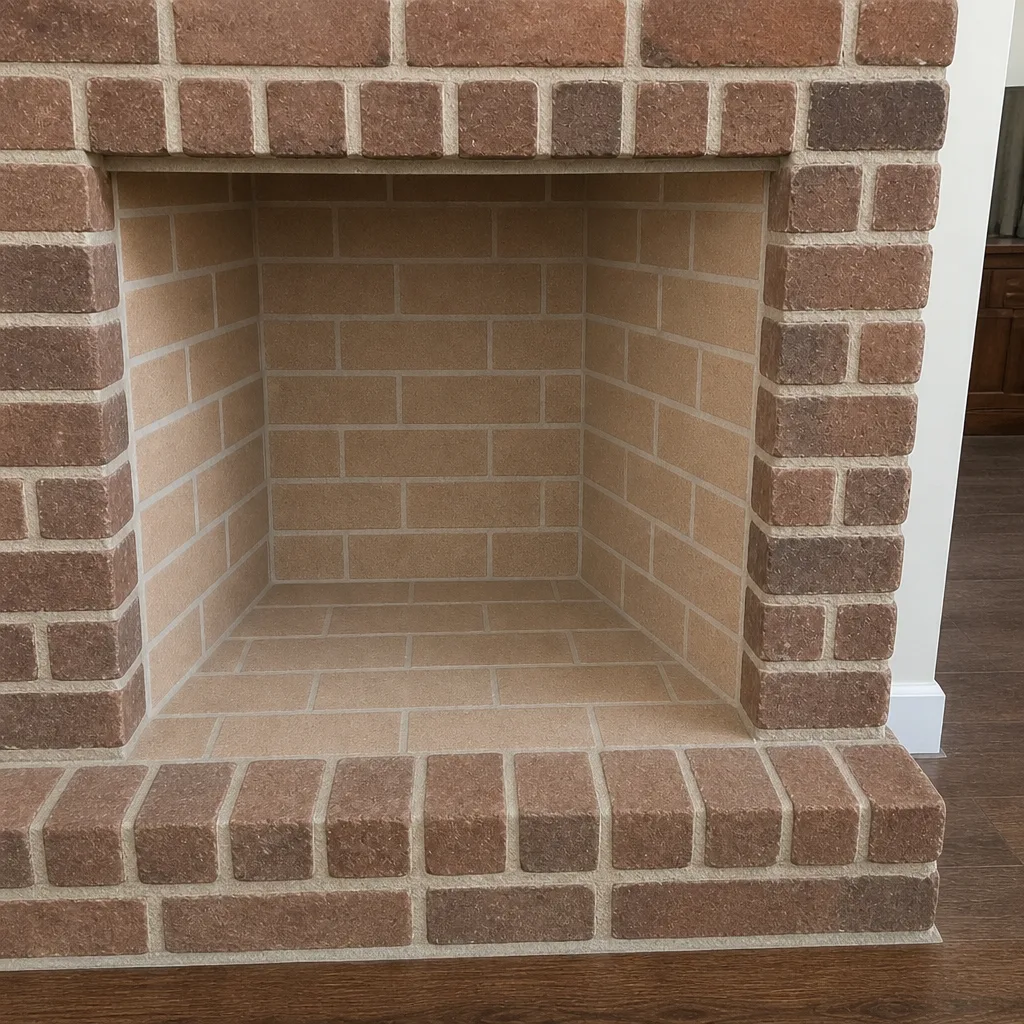 After
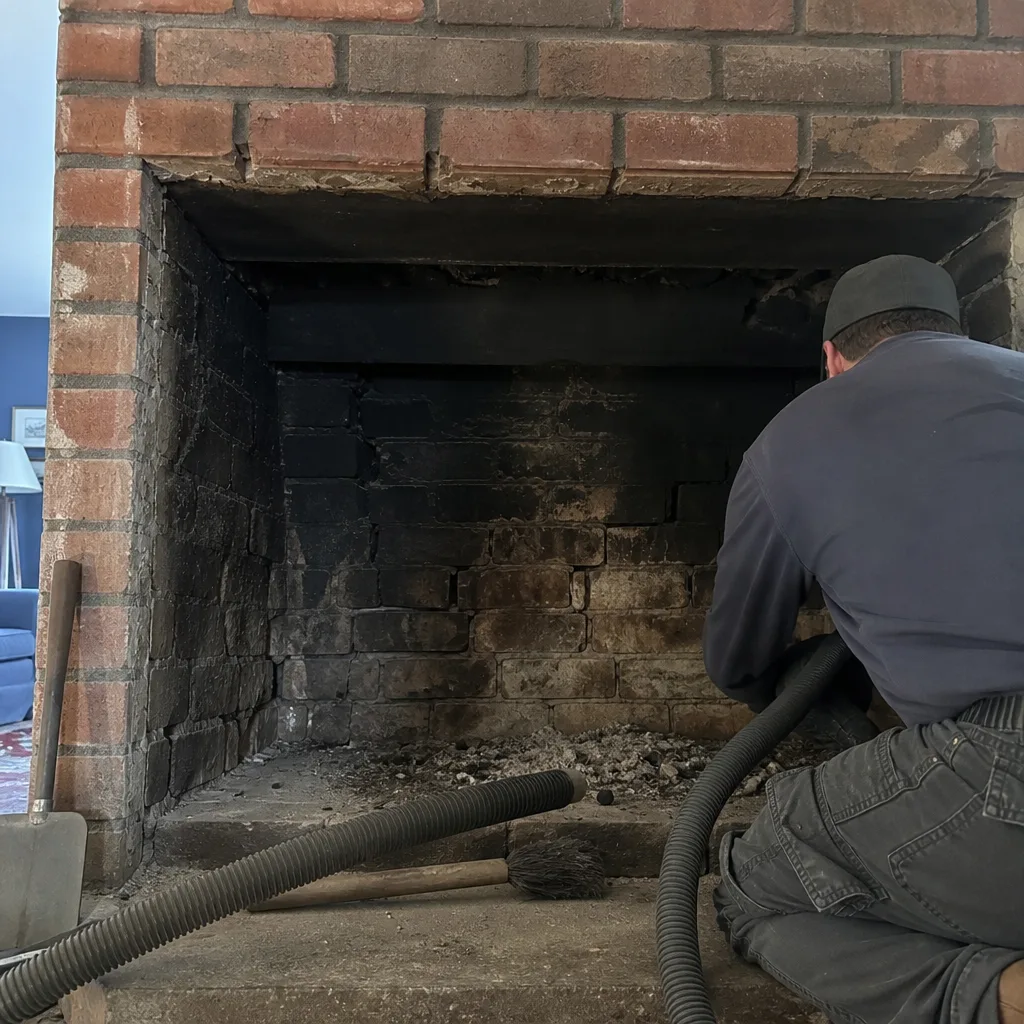 Before
 After
 Before
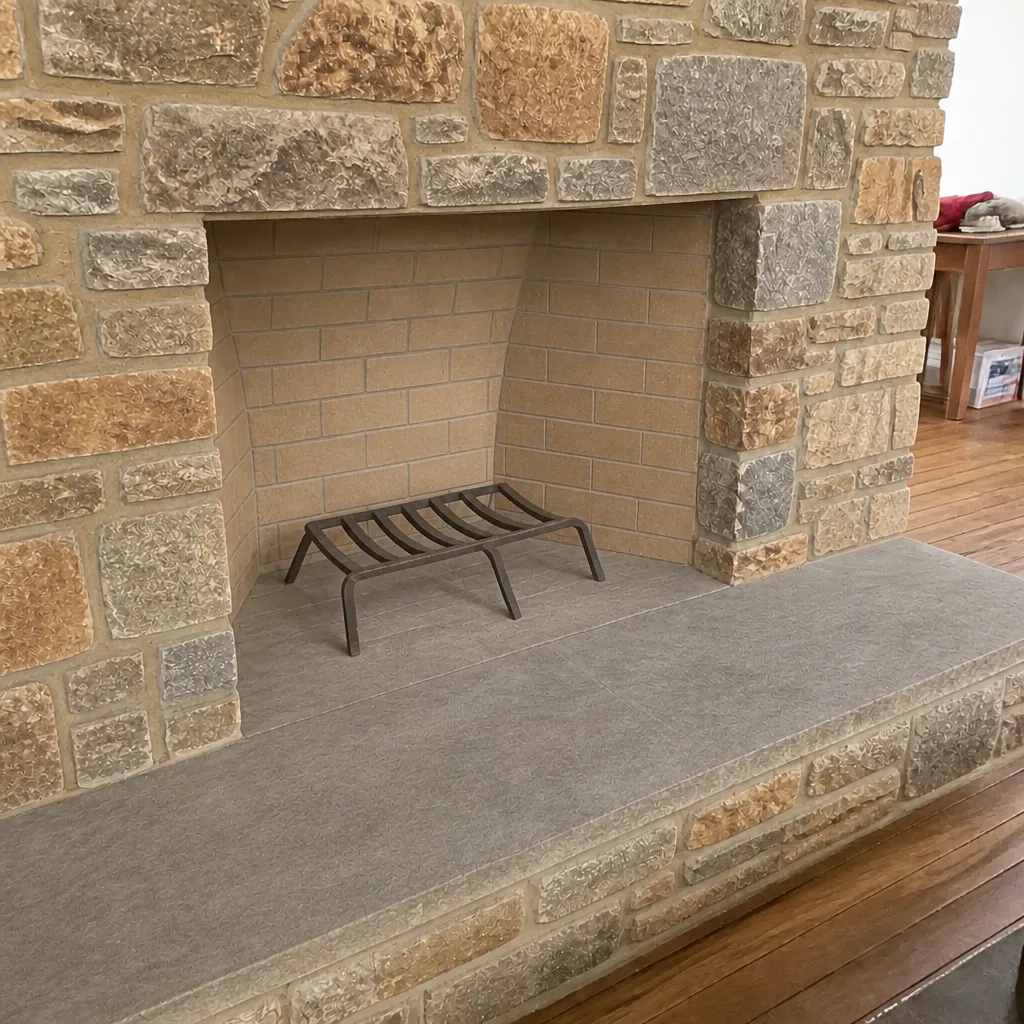 After
When to Call a Professional
Call a professional if you don’t have a documented inspection from the past year, if you see glassy or tar-like deposits anywhere in the firebox, if your liner type is unknown, or if you’ve noticed any sign of smoke backing into the room. Call us if the roof access is anything but secure, or if your chimney is old enough that you can’t account for all the winters it’s handled. Any one of those is enough on its own. The decision isn’t about whether DIY is possible; it’s about whether you have the information needed to know it’s safe, and in most of the cases that land in our in-box, that information isn’t there yet.
Chimney Sweep Knoxville offers free estimates in Knoxville – call (877) 792-6481. From the annual sweep to liner restoration, our team handles the full scope with professional-grade materials. When the inspection finds a cap, crown, or fireplace issue beyond cleaning, that work stays with the same company rather than passing to another contractor. If you’re weighing the DIY route, a fireplace repair visit is often the moment the whole picture becomes clear in a way a self-inspection never could. We use the same materials chimney professionals specify by name, including Gelco and Olympia Chimney, not whatever’s cheapest at the supply house.
Frequently Asked Questions
You can clean your own chimney in Knoxville only if the creosote is stage one (loose and flaky), you’ve had a recent professional inspection, and you’re willing to set up full containment and PPE. Without those three things in place, the safer and often cheaper answer is professional cleaning. Most Knoxville chimneys we inspect show some stage-two deposits that a hand brush cannot remove.
A chimney should be swept when roughly a quarter-inch of creosote has built up on the flue walls, and inspecting annually is the practical baseline for most homes. Homes that burn frequently through the winter may need more than one sweep a year. Call (877) 792-6481 to schedule an assessment rather than guessing at frequency.
Skipping the sweep lets creosote accumulate to the point where a chimney fire becomes a real risk, and it hides liner and crown problems until they get expensive. Creosote at stage two hardens into a fuel source, and the liner damage that follows is a bigger repair than the sweep would have been. Call (877) 792-6481 for an inspection before the next burning season.
DIY cleaning typically leaves no documentation that a professional sweep would produce, and documentation is often what matters when a chimney fire claim is evaluated. We can’t speak to your specific policy, but a dated inspection report and sweep record give an adjuster something concrete to review. Call (877) 792-6481 to get a documented sweep on record.
A chimney sweep in Knoxville typically runs $180 – $340 depending on flue size, access, and creosote volume, with the written estimate setting the final price. A DIY setup typically costs $150 – $300 for tools and containment alone, before the inspection you’d still need to make the DIY call safely. Call (877) 792-6481 for a free estimate.
Yes. Cleaning and inspecting are two separate jobs, and a brush cannot assess liner cracks, crown deterioration, flashing integrity, or negative-pressure draft problems. An inspection is the only way to confirm the deposits you’re cleaning are the full picture. Call (877) 792-6481 to schedule an inspection even if you’ve already swept.
The Bottom Line
DIY chimney cleaning isn’t wrong, but it’s conditional. It works when your creosote is stage one, your last inspection is recent, your containment and PPE setup is complete, and you’re genuinely comfortable on the roof (or sweeping entirely from below). Move any of those variables and the math tilts toward professional. In Knoxville specifically, the mix of valley humidity, older masonry housing stock, and real seasonal temperature swings pushes most chimneys past stage one, which is why we usually recommend the inspection before the equipment purchase. Get the assessment, then make the decision. The phone number is (877) 792-6481, the estimate is free, and a camera-documented inspection will settle the DIY question for your particular chimney rather than for some hypothetical one.
Call (877) 792-6481. We answer 24/7. Fast dispatch from 7am to 7pm, Sunday through Friday. Closed Saturday.
Written by the team at Chimney Sweep Knoxville.