
DuraFlex Chimney Sweep in Knoxville: A Homeowner’s Guide
If a Knoxville contractor quotes you a rigid stainless liner for an older brick chimney without first running a camera, there’s a good chance the liner won’t fit. DuraFlex flexible liners exist because most real-world flues have at least one offset that stops a rigid section cold. The camera tells you what you’re actually dealing with before anyone orders material. If you’d rather leave the diagnosis to a technician who does this every day, call (877) 792-6481.
What Is a DuraFlex Chimney Liner, Exactly?
A DuraFlex liner is a flexible, corrugated stainless steel flue liner used to reline a chimney that’s no longer safe or efficient with its original clay tile. It’s not a cleaning product, and it’s not a coating. It’s a structural flue inside your existing chimney, and it’s the piece of the job that matters most.
The specification that matters for wood-burning in East Tennessee is 316Ti stainless steel. That titanium-stabilized alloy holds up better against the acidic condensate that forms when wood smoke cools on the way up a chimney. DuraFlex is available in multiple wall thicknesses, and the heavier gauges are the ones you want on a wood-burning flue. A thinner gauge liner that meets a minimum spec will pass a basic code check, but the margin for corrosion over time is thinner too. Here’s what actually determines which liner your chimney needs:
- Flue dimensions – measured by camera, not guessed from the firebox opening.
- Fuel type – wood, gas, and oil all produce different exhaust chemistry and need different liner ratings.
- Appliance draft requirements – a liner that’s too large for the appliance runs cold and drafts poorly.
- Offset count and angle – the deciding factor for flexible versus rigid, which we’ll cover next.
Our technicians have up to 9 years of experience matching liner systems to what’s actually inside a Knoxville chimney. That match, not the brand name alone, is what keeps a fire burning safely season after season.
Why Offset Flues Make DuraFlex the Default in Knoxville
Knoxville has a lot of pre-1970 brick chimneys, and a large share of them were built with an offset. An offset is a jog in the flue, where the mason shifted the chimney to clear a roofline, a wall, or the framing around a fireplace. That jog is a right angle or a sharp angle, and it’s usually buried where no one can see it.
A rigid stainless liner is straight. Push one down a flue with an offset and it stops at the jog. Some installers try to force it, some break out clay tile to widen the path, and some simply tell the homeowner a liner isn’t possible. None of those are good outcomes. DuraFlex’s flexible corrugation is engineered to follow the flue’s actual geometry, including offsets, without losing the structural integrity of the liner itself.
That’s why flexible liners have become standard on East Tennessee brick chimneys. It’s not a marketing preference. It’s a material answer to a specific housing-stock problem. Rigid liner systems still have a place, and we keep Copperfield rigid components in inventory for the chimneys where a straight run is the right call. The point is that the flue, not the installer’s preference, decides.
What a DuraFlex Relining Job Looks Like, Step by Step
A professional DuraFlex installation follows a sequence. Knowing the sequence lets you evaluate a quote properly instead of taking someone’s word for it.
- 1
Camera inspection. We run a camera the full length of the flue and photograph what it finds: cracks in clay tile, gaps at joints, offset angles, and any prior liner remnants. You see the footage.
- 2
Sizing and material selection. Based on flue dimensions and the appliance you’re venting, we choose the DuraFlex gauge and confirm the liner is rated for your fuel type.
- 3
Cleaning and prep. The flue is cleaned so the liner sits against a clean surface, not a layer of creosote and debris.
- 4
Insulation wrap. The flexible liner is wrapped in insulation before it goes down. This keeps flue gases hot, improves draft, and protects against the condensation that attacks the liner from the inside.
- 5
Installation down the flue. The wrapped liner is fed down and follows the offsets rather than fighting them.
- 6
Top termination. A proper top plate and cap finish the job at the crown, sealing out rain and animals.
- 7
Appliance connection and final inspection. The liner connects to the appliance, and we document the finished installation with photos.
A flexible liner that gets skipped on insulation or finished without a proper top plate isn’t the same product, even if the material is correct. The parts around the liner do half the work.
DuraFlex Warranty: What Covers You and What Voids It
A DuraFlex liner carries a manufacturer’s warranty, and that warranty is tied directly to professional installation by a qualified technician. This is the part homeowners miss. The material warranty protects the liner against defects, but it does not protect an installation that was done wrong, and it doesn’t protect a liner damaged by the wrong cleaning tools or the wrong fuel.
In practice, the warranty stays intact when the work is done by a professional to the manufacturer’s specification, when the liner is matched to the appliance’s fuel type, and when the flue is maintained with the right sweeping method. It can be voided by a few things:
- Improper installation by an unqualified installer
- Sweeping with the wrong brush type or power equipment not approved for the liner
- Burning the wrong fuel for the liner’s rating
- Failure to maintain the flue over time
Because contractor selection is tied to material coverage, the person who installs the liner and the person who sweeps it later both matter. That’s why we handle both sides of the job ourselves, using DuraFlex and Copperfield systems we know the installation requirements for. If you’re comparing quotes, ask whether warranty registration is included, and get it in writing.
How a Relined Flue Is Swept Differently
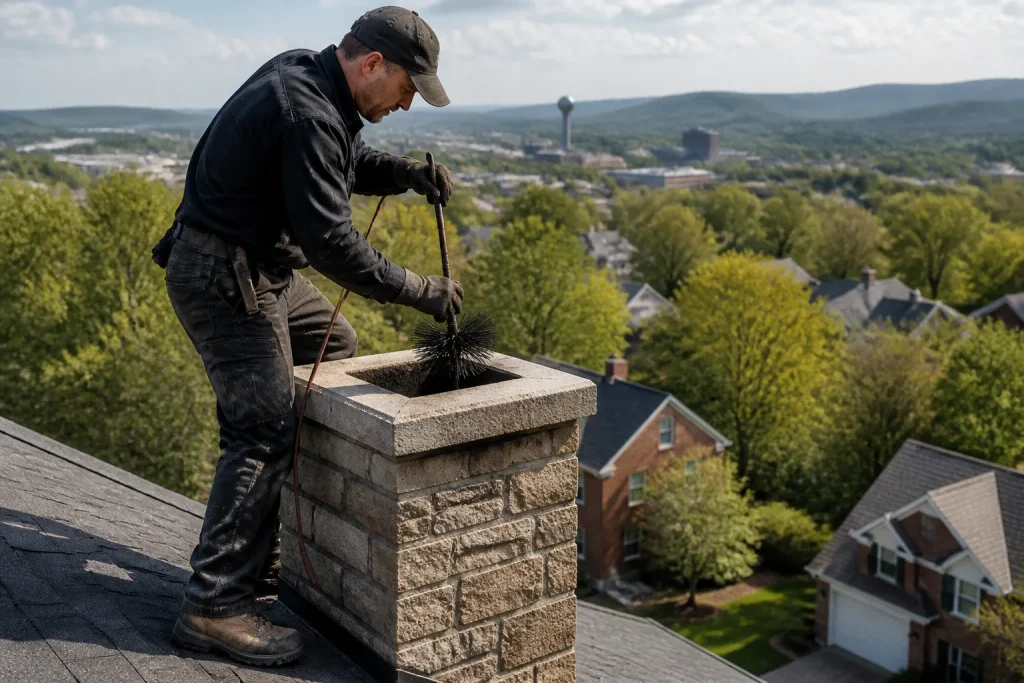
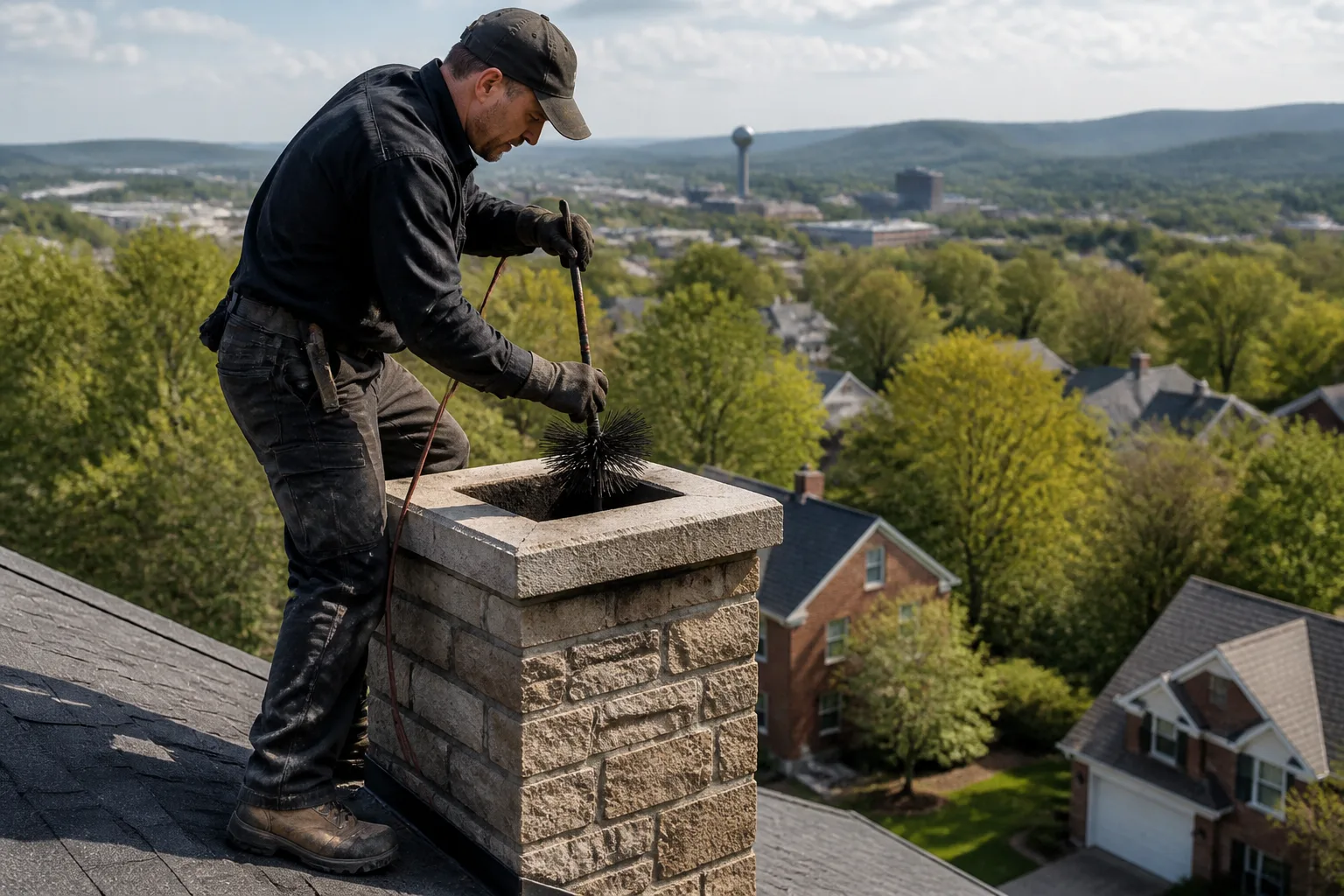
A DuraFlex-relined flue is cleaned differently from an original clay tile liner. The liner’s corrugated interior surface holds creosote differently than smooth clay, and the right brush type protects the liner instead of wearing at it. Poly brushes are the standard for a stainless flexible liner. Wire brushes and powered rotary equipment can abrade the liner’s interior and void the manufacturer’s warranty if used carelessly, so they don’t belong in a relined flue unless a professional confirms the material tolerates them.
The annual sweep on a relined flue also includes visual verification of the liner itself: checking the top termination, looking for any signs of separation or damage, and confirming the appliance connection is sound. When we schedule a chimney sweep on a home with a DuraFlex liner, we use the brush type that liner requires, not the same one that goes down a bare clay flue. An unknown or neglected liner is worth a Chimney Sweep Knoxville inspection before the season starts.
Creosote builds up in three forms, and glazed third-degree creosote is the hardest to remove and the most dangerous to leave. On a liner, that buildup is the risk that matters most heading into Knoxville’s burning season.
When to Call a Pro
Call a professional if your flue was never lined, if the liner is over 15 years old and never inspected, if you see damaged clay tile from a camera inspection, or if the firebox has cracks. Severe structural damage in a firebox or chimney breast is a chimney repair job, not a cleaning. And a missing or damaged cap lets water and animals into the flue; that’s a chimney cap & crown fix before it becomes a liner replacement. Firebox cracks are a fireplace repair call.
We won’t recommend a liner unless the camera footage shows a problem the liner solves, and we’ll tell you plainly if the work can wait. Before anything starts, the price is set by a written estimate. A true professional is not the one who’s cheapest; it’s the one who shows you the evidence.
The Bottom Line
DuraFlex matters in Knoxville for one reason: it navigates the offsets that older East Tennessee brick chimneys actually have, where a rigid liner gets stuck. Choose a liner by its alloy spec (316Ti for wood-burning) and its gauge, not by whichever brand is cheapest. Pick a company that runs a camera first, includes insulation and a top termination, sweeps with the brush the liner requires, and stands behind the installation in writing. If you’re in Knoxville and need help, Chimney Sweep Knoxville offers free estimates. Call (877) 792-6481.
Frequently Asked Questions
A DuraFlex chimney liner is a flexible stainless steel flue liner used to reline a chimney that’s no longer safe with its original clay tile. The most common wood-burning specification is titanium-stabilized 316Ti stainless in a heavier gauge, installed insulated and finished at the top with a proper termination. Call (877) 792-6481 for a free estimate.
A flexible liner is usually the answer when the flue has an offset or irregular geometry, which describes many pre-1970 brick chimneys in Knoxville. A rigid liner can work when the flue is a straight run and the dimensions suit it. The camera inspection decides which one your chimney actually needs. Call (877) 792-6481 for a free estimate.
A DuraFlex warranty can be voided by installation that doesn’t follow manufacturer specifications, by sweeping with the wrong brush type or unapproved power equipment, by burning a fuel the liner isn’t rated for, and by neglected maintenance. Professional installation keeps the coverage intact. Call (877) 792-6481 for a free estimate.
A DuraFlex-relined flue should be swept with poly brushes, not wire brushes or careless rotary equipment, because the wrong tool can abrade the liner and void the warranty. The annual sweep should also verify the top termination and appliance connection. Call (877) 792-6481 for a free estimate.
Written by the team at Chimney Sweep Knoxville.
Need Chimney Cleaning Help?
Call Chimney Sweep Knoxville - the local pro we connect you with is licensed and insured, here with fast help in Knoxville.
(877) 792-6481